Overview
I worked on Good Morning, SleepyLand! from the first brainstorming workshops through to release, as the only person responsible for the narrative department.
That meant owning the narrative work end to end:
- developing the narrative premise,
- shaping the branching structure,
- designing narrative systems in collaboration with the game designer/developer,
- creating and pitching characters and locations,
- writing dialogue,
- defining tone of voice,
- making sure the story logic worked inside the game’s monthly loop.
The project was a 2D narrative simulator about political apathy, emotional disengagement, and the slow consequences of everyday choices.
My role was not only to write the story but also to turn abstract themes such as uncertainty, avoidance, civic responsibility, and social pressure into player-facing systems and choices.
Narrative approach
The core challenge of Good Morning, SleepyLand! was writing a story where nothing looked immediately dramatic, but every small choice could quietly shape the town’s future.
The game follows Marko, an ordinary citizen in the apathetic town of SleepyLand. When his mother is unfairly fired on racist grounds, the political tensions everyone has learned to ignore suddenly become personal.
Guided by a politically committed friend, Marko starts exploring what he can actually do: who he can talk to, who he can convince, what risks he is willing to take, and whether a sleeping town can be woken up.
Waking it requires presence: relationships in SleepyLand only grow if the player keeps engaging, and disengaged answers close arcs early, quietly costing the support Marko will need later.
The narrative had to support the game’s systemic structure. Dialogue, character interactions, monthly newspapers, and branching events all worked together to reflect the player’s behavior over time.
Character design approach
One of my main concerns while working on Good Morning, SleepyLand! was how players might receive a story about political apathy, discrimination, and civic responsibility.
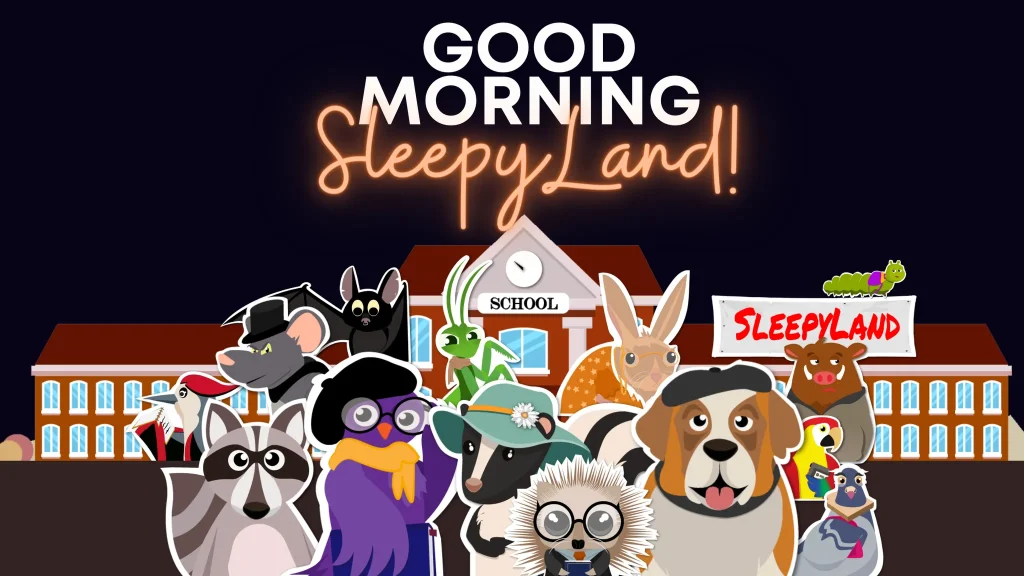
Because the theme was sensitive, I proposed avoiding direct human representation and populating SleepyLand with anthropomorphised animals instead. This gave the game a layer of stylisation: enough distance to make the subject approachable, but not so much distance that the emotional and political stakes disappeared.
I used each animal identity as narrative shorthand. Species, posture, behaviour, and voice were all chosen to suggest character, background, and relationship to the town’s systems before a single line of dialogue was spoken.
Character profiles & dialogue samples
Pidgy
Role: Generic citizen
Function: Everyday apathy – scarcity mindset – passive complicity
Voice: Distracted, defensive, self-interested, comic on the surface but politically revealing underneath
The pigeon citizen represents one of SleepyLand’s most ordinary forms of apathy: a narrowed field of attention, not open villainy. They are obsessed with crumbs – small, immediate scraps of survival – and that obsession keeps them from looking at the wider systems shaping their life.
Their dialogue evolves through repeated encounters, driven by how the player engages.
At first, Pidgy repeats exclusionary ideas without examining them; if Marko keeps engaging with presence and attention, the pigeon slowly moves from scarcity toward the idea that they might deserve more than what is dropped from above. If the player disengages, the arc quietly ends there.

Character design brief was mine; illustration by Arianna Lona.
Dialogue progression
Pidgy’s arc below shows the system we talked about: the player will meet Pidgy, but they may lose them in the process.
Why I love Pidgy
The pigeon’s arc is about self-worth and not about sudden political enlightenment.
At first, they see scarcity as natural and fight others at the bottom for scraps. By the final encounter, they have begun to recognise that the crumbs were never all they were allowed to want. Their support for Marko grows from the player choices: before they can stand with others, they have to believe they deserve more themself.
Pidgy is one of several citizens whose dialogue evolves with the town’s state; additional profiles available on request.