Disclaimer
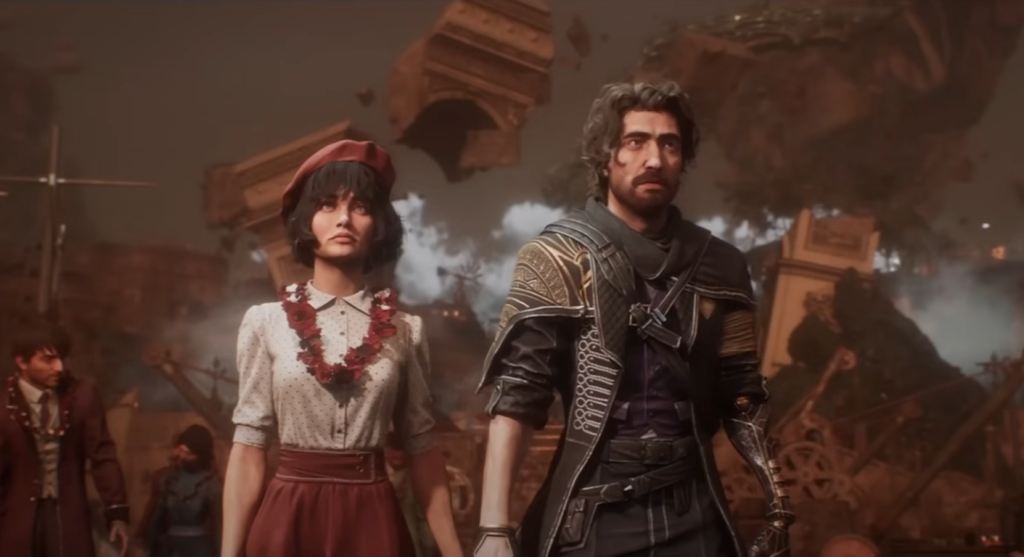
This is a speculative narrative design exercise based on a moment in Clair Obscur: Expedition 33.
It contains spoilers.
These what-ifs are not attempts to “fix” the original work from the outside. They are small design exercises based on moments that almost worked for me, but left some emotional or systemic potential unexplored.
My question is simple: What if it went differently?
The moment
The battle against the Paintress is framed as a major emotional and narrative climax.
She is the reason the expedition exists in the first place: the figure who erases people every year by writing a number on the monolith. For much of the journey, reaching her feels like the point of everything.
But by the time the party finally faces her, the story has already complicated that premise. The Paintress is not simply a distant goddess of destruction. She is Verso’s mother – or what remains of her – trapped inside the Canvas, consumed by grief, and clinging to the world her son left behind.
So when the party defeats her first vessel, it feels like the battle should shift, and it does.
Her giant form rises from the cliffs: the same enormous figure seen during the Gommage. Her small vessel lifts into the air, moving toward her heart. Phase two is about to begin, and the party needs to fly.
Verso calls for Esquie, and Esquie comes soaring in, circling dangerously close to the Paintress.
For a moment, it feels like the scene is setting up for disaster.
I remember thinking:
She’s going to swat him out of the sky.
But she doesn’t.
Esquie lands safely, the party climbs on, he takes off, and the second phase begins.
You can watch the battle here:
What it seems to be aiming for
The scene seems designed as a scale escalation.
The Paintress becomes physically enormous, the battlefield expands, and the fight moves from a direct confrontation with her vessel to a more mythic battle against the giant figure behind it.
Functionally, it works as a phase transition: the game raises the visual stakes, shifts the arena, and reinforces the Paintress as something larger than a normal enemy.
The problem is that the emotional stakes do not escalate as much as the visual ones.
The moment creates vulnerability: Esquie flying too close, the Paintress towering above him and the party, the party dependent on him, but then it resolves without consequence.
Where it left me wanting more
The scene left a gap between what it showed and what it made me feel.
Everything in the framing suggested danger. Esquie is soft, strange, comic, and beloved. He carries lightness in a story increasingly shaped by grief, so seeing him fly near the Paintress made him feel suddenly fragile. The game, though, lets that fragility pass untouched.
The result is that the phase transition becomes mostly spectacular rather than emotionally transformative. The boss becomes bigger, but the player’s relationship to the fight does not meaningfully change.
The story is already telling us that the Paintress’s grief has become destructive, blinding, and consuming. This would have been a powerful place to make the player feel that directly through the temporary loss of something joyful.
What if we did it like this?
What if the Paintress did swat Esquie out of the sky?
Not deliberately, or cruelly: carelessly.
She is too consumed by grief to see him, too lost in her own pain to register the small, living thing crossing her path, and so dear to her own son.
Her hand moves through the fog. Esquie is hit. He crashes into the battlefield.
Red wine spills across the ground, and for one terrible second, it looks like blood. [Small lore note: Verso stores his stash of wine inside Esquie]
Verso screams, and the fight changes.
Instead of moving directly into the second phase, the battle becomes a short protective survival encounter. Esquie’s crumpled body remains at the centre of the arena, and the party must defend him long enough for him to recover and re-inflate.
In this moment, the objective is not to win the battle; it is to hold on.
The Paintress’s vessel attacks erratically. The giant form lashes out from beyond the fog. The arena becomes unstable. The party cannot heal Esquie faster, cannot skip the sequence, and cannot solve the grief.
They can only protect him until he rises again.
Why this might work
This change would turn a visual escalation into an emotional one.
The battle would no longer be only about facing a larger version of the boss; it would briefly become about protecting something small, soft, and beloved from the collateral damage of grief.
It would also give the player a different kind of agency: not victory agency, but care agency. The player cannot undo what happened, but they can keep Esquie alive.
Mechanically, the structure could remain simple. It would not require a new questline or major narrative branch, only a temporary shift in objective before the second phase begins. Emotionally, though, the effect would be significant.
The player would enter phase two carrying the fear of almost losing Esquie, and the Paintress would feel more dangerous because her grief had nearly erased joy (Esquie) without her even noticing.
That, to me, would make the escalation land harder, because the Paintress does not only kill with force, she kills with absence.